Feb 3, 2026 • Design • 6 min read
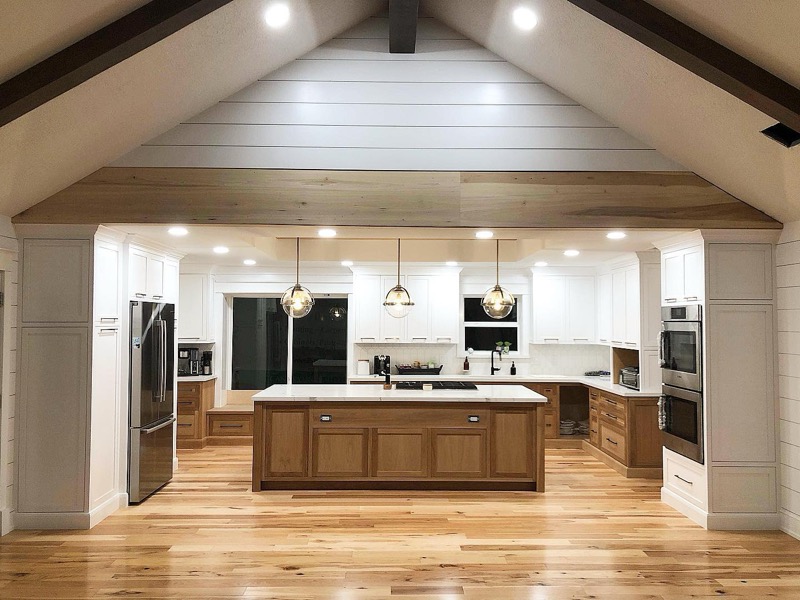
If you've been reading design magazines or scrolling Instagram lately, you've probably seen people saying the open concept kitchen is over. Closed kitchens are coming back, they claim. Walls are trendy again. Separation is the new thing.
Maybe in New York or San Francisco. But not here. After 20 years of remodeling homes across the Greater Houston area, I can tell you straight up: open concept kitchens are still the number-one thing Houston homeowners ask for. And it's not even close.
Here's why that's the case, and what you should know if you're thinking about knocking down a wall.
HOUSTON IS BUILT FOR ENTERTAINING
Houston people entertain at home. A lot. Sunday football with the whole family. Crawfish boils in the spring. Friends over for dinner on a Friday. That's just how we live here, and an open kitchen makes all of that better.
When the kitchen is open, the person cooking is part of the party instead of stuck behind a wall. You can chop vegetables, pour drinks, and talk to your guests at the same time. The kitchen becomes the social center of the house, which is exactly how Houston families use it.
In our client meetings, the thing we hear more than anything else is: "I want to see my family while I'm cooking." That's the driving force behind most of our kitchen remodels. People want to be connected, not isolated in a separate room.
HOUSTON'S WEATHER KEEPS US INSIDE
Let's be real about the weather. June through September is brutal. Hot, humid, and sticky. That means Houston families spend a lot more time indoors than people in milder climates. When you're inside your house for 8+ months out of the year, the space needs to feel as big and open as it can.
Open layouts make smaller homes feel way bigger. Take away the walls between the kitchen, dining room, and living room, and a 2,000-square-foot house suddenly feels 30-40% larger. Closed rooms just can't do that.
Natural light moves through open spaces better, too. Instead of hitting a wall and stopping, light carries across the whole area and makes everything brighter. In a city where we're constantly trying to bring the outside in (minus the humidity), getting the most out of your natural light is a big deal.
WHAT IT COSTS TO OPEN UP YOUR KITCHEN
The price of going from a closed kitchen to open concept comes down to one main question: is that wall load-bearing or not?
- Non-load-bearing wall removal: $1,500 - $5,000: This is the straightforward version. Wall comes down, drywall gets patched, flooring gets connected, fresh paint ties it together. Quick project, big visual difference.
- Load-bearing wall removal: $5,000 - $25,000: This takes more work. A structural engineer has to design a beam to take over for the wall. We install the beam (steel or engineered lumber), take the wall down, and finish the ceiling around the new structure. Price depends on the span, the load above, and whether you want the beam exposed or hidden.
Other costs to think about:
- Flooring: If the two rooms have different floors, you'll need to either match what's there or put new flooring across the whole space. Budget $3-$15 per square foot depending on the material.
- Moving stuff that's in the wall: Walls usually have outlets, switches, plumbing vents, or HVAC runs inside them. Relocating all of that is standard work but it does add to the cost.
- Permits: Structural work in Houston needs a permit and inspection. Your contractor should handle this. Typically runs $500-$1,500.
DESIGN TIPS FOR OPEN CONCEPT KITCHENS
Taking down the wall is actually the easy part. Making the combined space feel like it was always meant to be one room, that's where the real skill comes in. Here's what we do on our Houston open concept projects:
USE FLOORING TO DEFINE ZONES
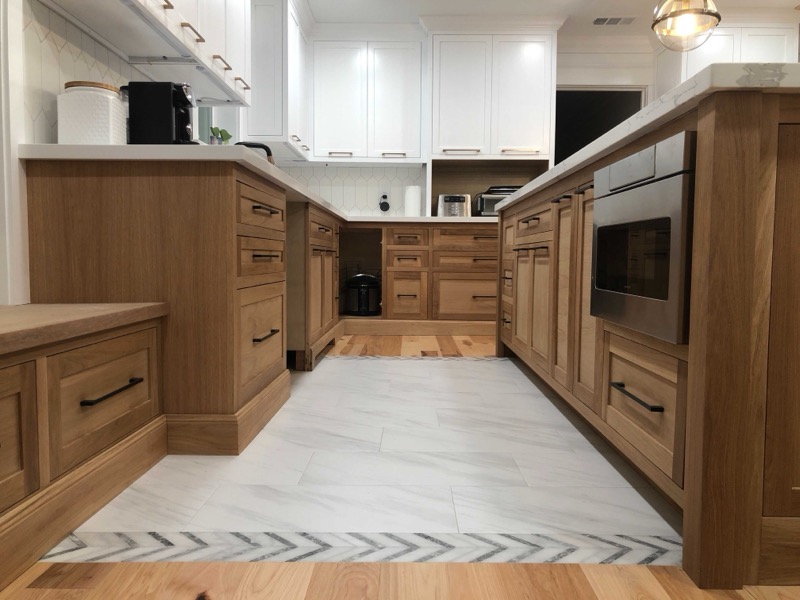
Different flooring materials give you a visual boundary without a physical wall. Tile or stone in the kitchen area transitioning to hardwood in the living area works really well. A clean transition strip or waterfall edge where the materials meet makes it look planned, not patched.
USE LIGHTING TO SEPARATE AREAS
Different light fixtures in each zone do a lot of work. Pendants over the island, recessed cans in the kitchen work area, a nice fixture over the dining table, sconces or floor lamps in the living room. Each area gets its own feel within the bigger space. Put everything on dimmers so you can adjust for cooking vs. eating vs. hanging out.
THE ISLAND IS EVERYTHING
In an open concept kitchen, the island is probably the most important thing in the room. It's the divider between kitchen and living space, the main prep area, the spot where everyone sits and eats breakfast, and the visual anchor for the whole floor plan. Don't skimp on it. Size, material, seating, storage. It all matters.
KEEP THE SIGHT LINES OPEN
The whole point of open concept is being able to see across the space. Don't block that with tall upper cabinets, a massive range hood, or oversized pendants in the wrong spots. Keep upper cabinets on the perimeter walls and leave the island and peninsula areas clear.
MISTAKES WE SEE PEOPLE MAKE
- Taking out a load-bearing wall without an engineer: Do not do this yourself. Period. A structural failure can cost tens of thousands to fix and puts your family at risk. Hire a licensed pro and pull the permits.
- Forgetting about ventilation: Open kitchens mean cooking smells go everywhere. Get a good range hood with enough CFM for your cooktop. Otherwise the whole house smells like last night's fish tacos.
- Not thinking about clutter: In a closed kitchen, nobody sees your dirty dishes. In an open kitchen, everything is visible. Plan for enough storage, create a landing zone for the daily mess, and think about a small prep kitchen or scullery if your budget allows.
- Ignoring sound: Big open rooms with hard surfaces echo. Tile, stone, and glass all bounce sound around. Balance things out with an area rug in the living zone, upholstered furniture, and window treatments. These absorb noise and make the space more comfortable.
- Winging it without a design plan: Just knocking down a wall without planning the combined space gives you a room that feels unfinished. Plan the kitchen, dining, and living areas together as one connected space before demo day.
"Opening up a kitchen isn't just about removing a wall. It's about making one connected space where cooking, eating, and living all work together. The demo takes a day. Good design is what makes that room work for the next 20 years."
Thinking about opening up your Houston kitchen? This is what we do all the time, from the structural engineering to the finish details. Set up a free in-home consultation and let's figure out what makes sense for your space.