How to choose a design-build remodeler in Houston.
Nov 1, 2026 · Advice · 8 min read
By Frank Lujan, founder and lead designer
Seven questions to ask before you sign, and how to read the bids.

Nov 1, 2026 · Advice · 8 min read
By Frank Lujan, founder and lead designer
Seven questions to ask before you sign, and how to read the bids.
We've been in this business for over 20 years, and we've watched homeowners get hurt in ways that could have been avoided if they'd just known what to look out for. Crafted Kitchens got started because Frank kept seeing Houston homeowners get let down by contractors who cut corners.
How you set up a remodel will affect your budget, your timeline, your stress level, and the end result more than almost anything else, and how someone treats you before the project is the best preview of how they'll treat you during it.
Here's how design-build works, seven questions to ask before you sign, and how to read the bids.
With design-build, one company handles both the design and the construction under a single contract. Your designer and your builder are on the same team, and they sit in the same meetings.
With the traditional approach, sometimes called Design-Bid-Build, you hire a designer or architect first, take their plans to several contractors, get bids, and pick one. Your designer and your contractor are different companies with different goals, and when those goals bump up against each other, you're the one stuck in the middle.
With design-build there's one point of contact. If something goes sideways, the firm owns it and fixes it. And since the same company designs and builds, the designer knows what things cost and works within your budget from day one.
The traditional model can work better when a historic building needs a preservation specialist, architecture is the main deliverable on a custom home, a public or commercial project requires competitive bidding, or homeowners want to manage every vendor and have the time and experience to do it. We walk through both models in Design/Build vs. traditional remodeling.
At Crafted Kitchens, we're a design-build firm, so we handle everything in-house: design, materials, demo, construction, installation. On interior remodels, all trades work under one roof, so you deal with one person. Whoever you talk to, listen for a clear answer on who owns the job, so there's no finger-pointing between contractors later.
At bare minimum, your contractor needs general liability insurance, which covers your home if something goes wrong during construction, and workers' comp insurance, which protects you from getting sued if a worker gets hurt on your property. Ask for their insurance certificates and actually call the insurance company to make sure they're current.
According to the City of Houston's New Business Guide, general contractors are not professionally licensed in Houston or by the State of Texas, and there is no "general contractor license." The trades are different: electrical, plumbing, and HVAC work in Houston has to be done by licensed pros.
You should. We give you a detailed proposal before we start so you know exactly where every dollar goes. If someone hands you a one-page "proposal" with a total price and wants to shake on it, walk away.
The Texas Attorney General's office says to insist on a written contract that specifically states what the contractor will do, when the work will start, and when it will be completed, and not to sign a contract with blanks in it.
Our rule of thumb: a fair deposit is 10-15% of the total project cost. Some contractors go up to 20% when the project involves long-lead custom materials, and that's fine as long as the contract spells out exactly what those materials are. Watch out for anyone asking for 50% upfront or for cash.
Tie your payments to actual milestones: demo done, rough-in done, cabinets installed, final walkthrough. You pay for work that's been completed, not work that's been talked about.
Start by asking who is pulling your permit and who is sealing your drawings. On our kitchen remodels, we pull the permits and schedule the inspections.
Here's one example of when a permit applies. Taking out a load bearing wall falls under a City of Houston residential remodel permit, not a repair permit, because you are changing the floor plan of the house.
Houston's residential permitting guidance says demolition of a load bearing wall may also require an engineer seal, which is a case by case call by the city rather than an automatic rule. On our projects we bring in a licensed Texas structural engineer either way. Our load bearing wall removal page covers what the city asks for.
Pay attention to how a contractor communicates during the sales phase, because this is them at their best. Good contractors get back to you within 24 hours on calls and emails, show up on time for estimates and meetings, and give you straight answers, even when it's not what you want to hear.
During construction on our jobs, you get daily updates and we keep the job site clean. On a kitchen remodel, we put up dust barriers to keep the mess contained and clean up every day before we leave.
Ask for three recent references and call every one of them. Go see a finished project if you can. Any contractor worth hiring will happily hand all of this over.
You can see our recent projects in our portfolio and read our Google reviews to see what our clients have to say.
Houston is its own animal, so raise these with any firm you're considering:
A bid that's way lower than everyone else's is not a deal. It's a red flag. There are only a few reasons a number would be that low:
The Texas Attorney General's office gives similar advice: get the bids in writing, and look for detail about exactly what will be done.
For a sense of scale, here's what our own service pages say. On kitchens, a targeted update might run $25,000, a full gut with high-end finishes can go north of $150,000, and you can figure 6 to 12 weeks for most projects. On bathrooms, a standard remodel usually starts around $15,000, a high-end master bath can run $75,000 or more, and you should plan on 3 to 8 weeks depending on the scope.
Those are examples from our own pages, not a ceiling and not a pass or fail test for anyone's bid.
Here's how we work at Crafted Kitchens:
If you're getting ready for a remodel, get in touch to start a project inquiry.
With design-build, the designer works within your budget from day one. In the traditional model, you pay the designer their fee, then you find out what the project really costs when the bids come back.
General contractors are not professionally licensed in Houston or by the State of Texas, according to the City of Houston's New Business Guide. Electrical, plumbing, and HVAC work in Houston has to be done by licensed pros. Either way, ask for insurance certificates and call the insurance company to make sure they're current.
Our rule of thumb is that a fair deposit is 10-15% of the total project cost. Some contractors go up to 20% for long-lead custom materials, as long as the contract spells out exactly what those materials are. Tie your payments to milestones, so you pay for work that's been completed.
Line-item pricing and a clear scope, before any work starts. The contract should also cover a full materials list, a timeline with a start date and estimated completion date, a payment schedule tied to milestones, warranty info for both labor and materials, and a clear process for handling changes.
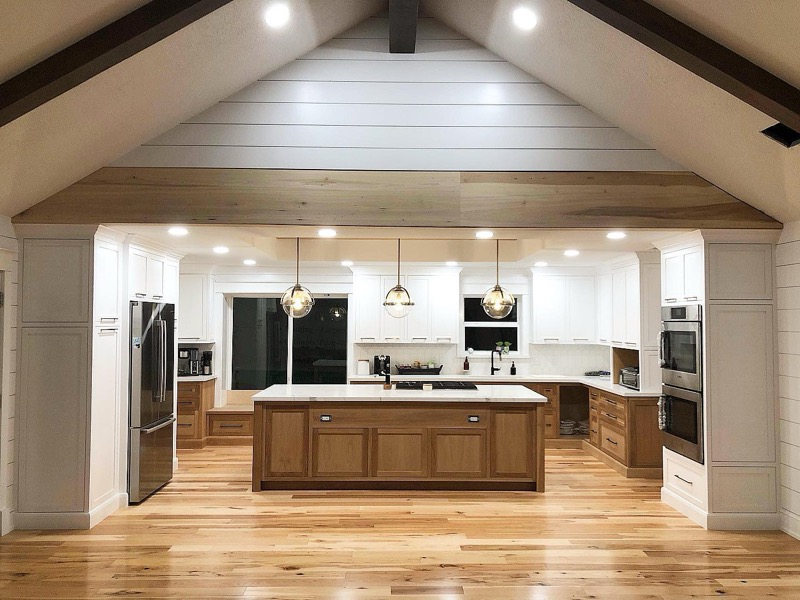
Two totally different ways to run a remodel. Here's why one works better for most people...
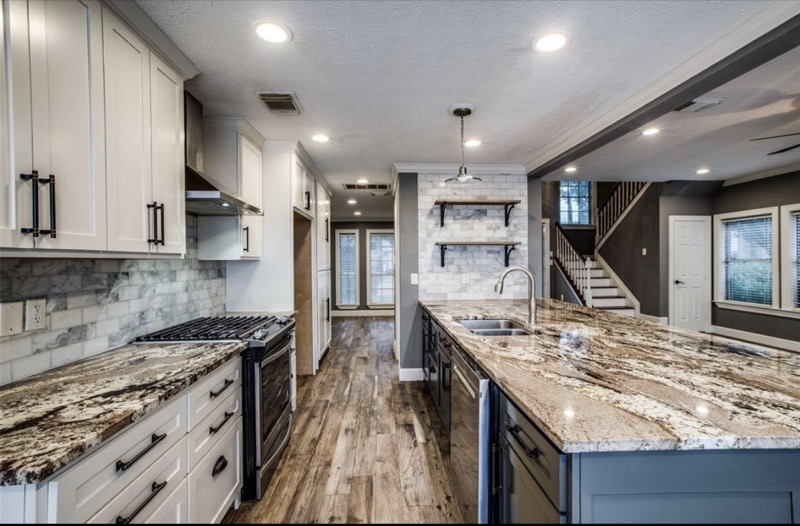
Watch out for these warning signs before you hand your project over to anyone...
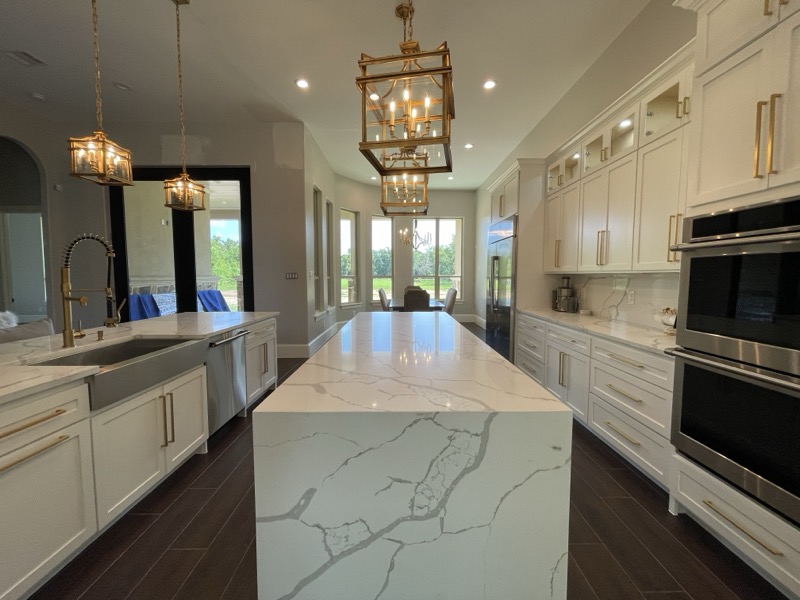
What kitchens actually cost in Houston right now, from quick refreshes to full gut jobs...
Tell us what you're thinking. We'll handle the rest.